
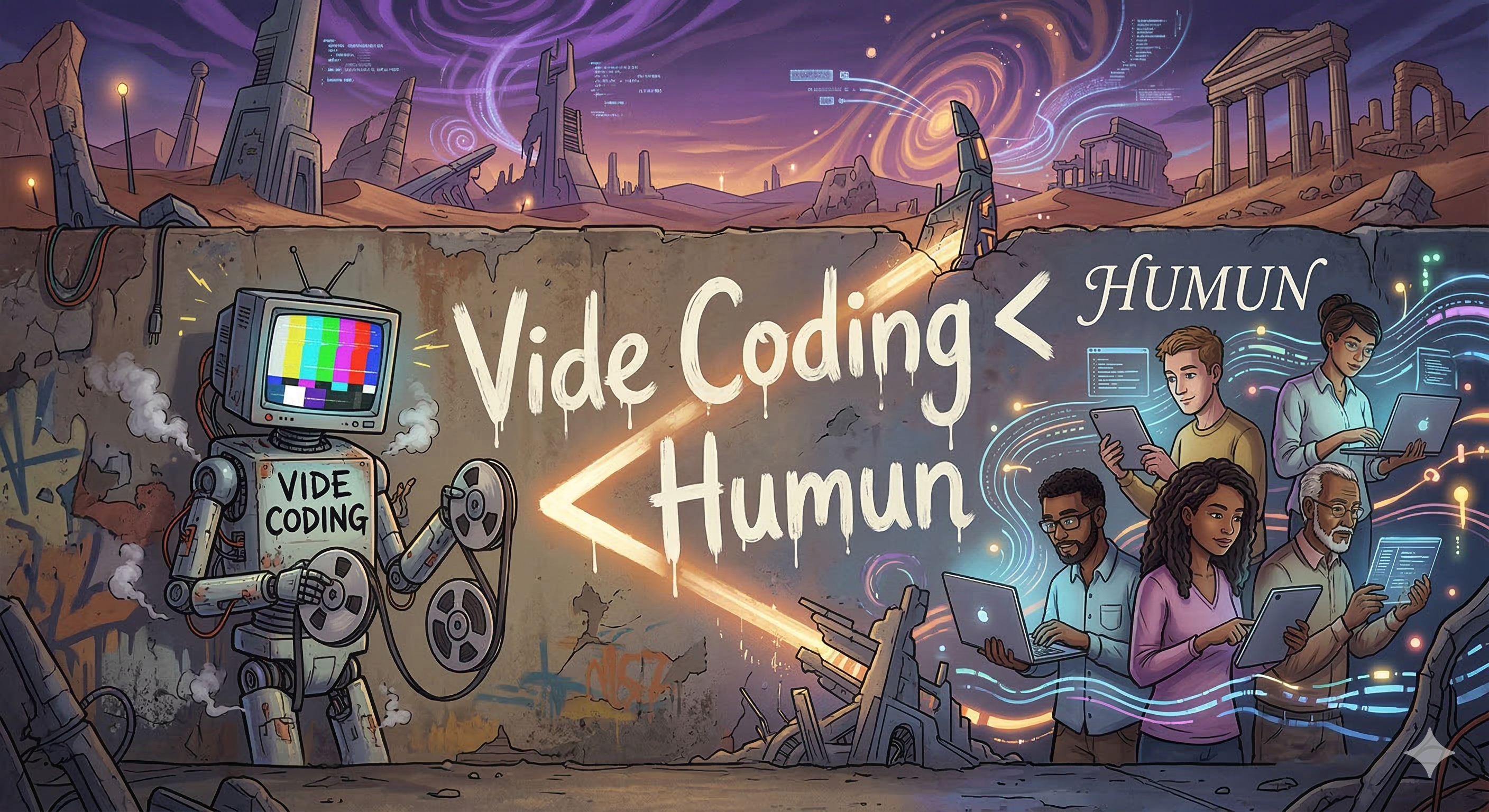
When we started building the new dashboard, we fully embraced "Vibe Coding." We used AI to generate components, wire up states, and bootstrap the UI. On paper, the speed was unbelievable: going from zero to a functional Next.js app in hours. It felt like coding was solved. But production had other plans.
Where Things Started Breaking
We implemented the features outlined by our vibe coding sessions. Visually, everything looked elegant. Then we moved into real-world server provisioning. Our primary action was spinning up a Hetzner VPS when a user clicked "Create Project." Instead of a smooth experience, we experienced:
- The UI hanging for 30 seconds
- API timeouts
- Database lockups
- Random deployment failures Every server creation blocked the main thread. Every request forced the user to stare at a loading spinner. Eventually, we had to admit something uncomfortable: We weren’t building a scalable SaaS anymore. We were shipping prototype architecture.
The Architectural Breaking Point
The realization was simple: We didn’t just need working code. We needed a reliable backend system capable of handling heavy asynchronous tasks. So we made the shift. Instead of handling long-running API calls in the main application logic, we built:
- A dedicated background worker (
workers/provisioning.ts) - Async database queues using Drizzle and PostgreSQL
- Instant UI feedback with centralized error handling
- Zero blocked API routes The impact was immediate.
What Changed
1. Performance Improved Instantly
In the vibe-coded version, every Hetzner API call tied up the server. Request → Wait for VPS → Wait for Cloud-Init → Respond. With our worker architecture:
- No UI freezing
- No dropped connections
- No orchestration overhead on the main API The user clicks create, the database updates immediately, and the background worker handles the 30-second provisioning. The system became faster and cleaner.
2. Decision Fatigue Disappeared
Previously, every heavy action triggered questions about timeouts and serverless limits. Now? We provide the objective to the worker. The worker handles the Hetzner integration and Telegram webhook setups internally. Architectural complexity dropped overnight.
Results After Refactoring
After consolidating the heavy lifting into background workers:
- UI timeouts stopped
- Server logs became reliable
- Response times dropped from seconds to milliseconds
- Debugging efforts dropped significantly Operational stability improved more from a solid human-designed architecture than from faster AI code generation.
What We Learned
Vibe coding is incredibly powerful. For rapid prototyping and UI components, it absolutely makes sense. But for deep infrastructural workflows, AI often chooses the simplest path, not the most scalable one. Speed of generation often feels like progress. But sometimes, sitting down to design a proper event-driven architecture is the real optimization.
Final Thought
If you’re facing:
- Slow API routes
- Timeouts on heavy tasks
- Unscalable monolithic functions You might not need better prompts. You might need better architecture. For us, scale didn’t come from generating more code. It came from structuring our execution flow correctly. And that made all the difference.