
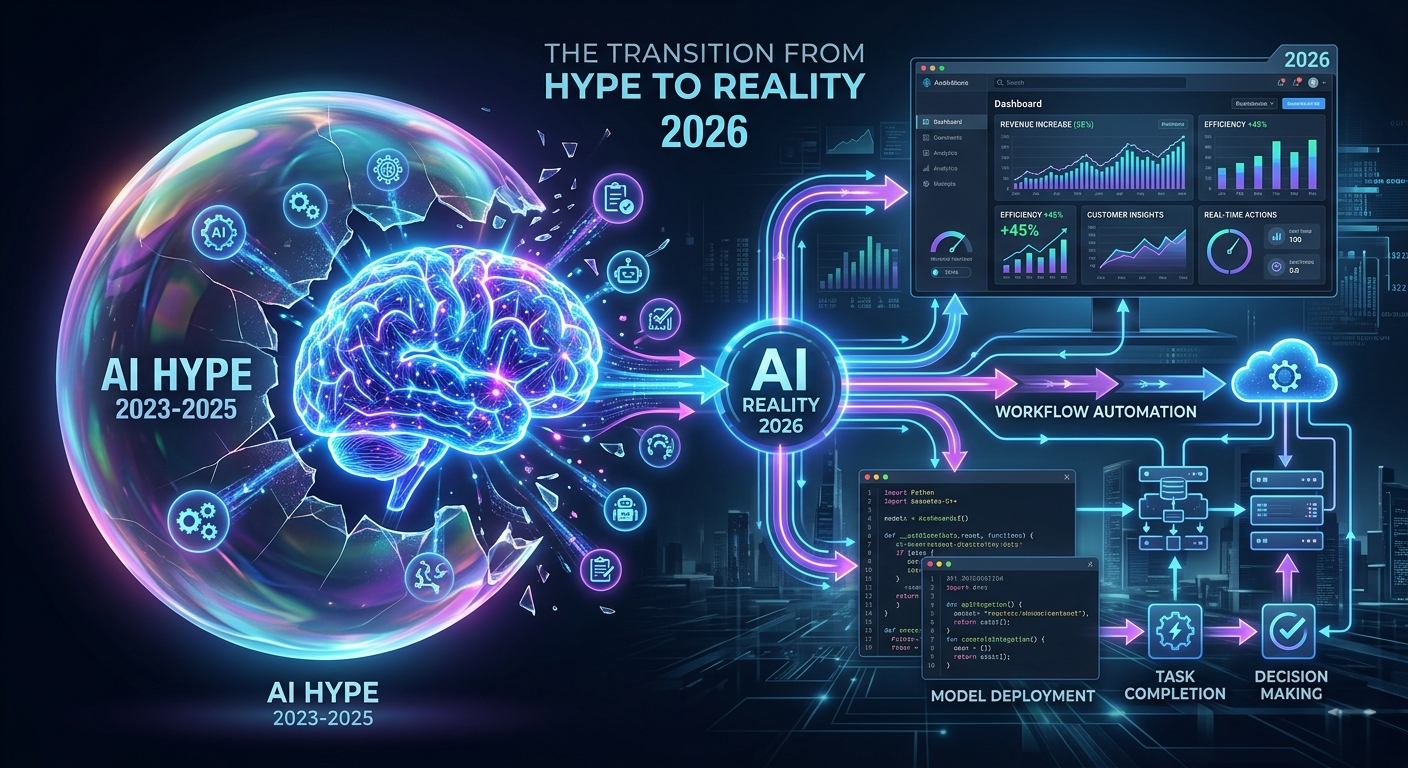
Introduction: The AI Hype Cycle Reaches a Turning Point
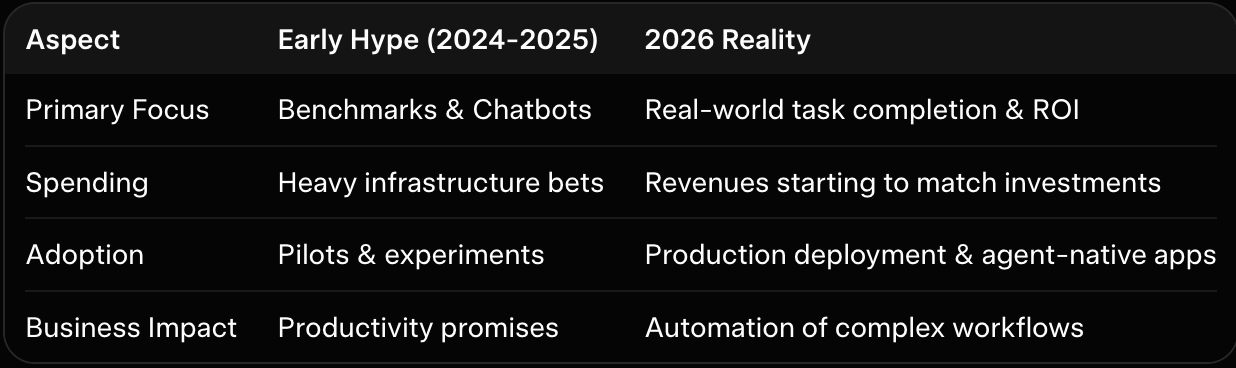
In early 2026, discussions about a potential AI bubble dominated headlines. Massive infrastructure spending raised questions about returns. Yet recent developments show a shift: revenues are catching up, especially through agentic AI systems that move beyond chatbots to autonomous, actionable intelligence.
At Axentia, we see this transition daily as we build production applications for clients. The focus has moved from experimentation to measurable business impact.
Why Agentic AI Is Gaining Real Traction Now
Unlike traditional generative AI that responds to prompts, agentic AI systems can plan, reason, use tools, iterate, and complete complex multi-step tasks with minimal human oversight. Recent advancements include:
- OpenAI’s GPT-5.5 positioned as the foundation for an agent-driven “compute-powered economy”
- Anthropic’s Claude models showing strong performance in coding and autonomous workflows
- Cloudflare and Stripe enabling AI agents to autonomously create accounts, buy domains, and deploy applications
- Salesforce adopting headless architectures so agents can directly interact with enterprise systems
These developments signal the arrival of agent-native software, where AI agents become the primary interface rather than just assistants.
Hype vs Reality: What the Numbers Show
How Full Stack Teams Should Build Agentic Systems Today
Successful production agentic applications require more than just connecting an LLM. Key considerations include:
- Orchestration Frameworks: LangGraph for reliable stateful workflows
- Tool Integration: Dynamic access to APIs, databases, and external services
- Observability & Guardrails: Tracing every decision for debugging, cost control, and safety
- Frontend Integration: Next.js-based interfaces that feel natural for agent interactions
- Evaluation: Moving beyond accuracy to measure task success and business outcomes
Modern stacks combine multimodal capabilities with agentic reasoning for richer experiences.
Real-World Opportunities for Businesses
- Autonomous customer support that resolves issues across multiple systems
- Intelligent internal tools for research, analysis, and reporting
- Agent-native SaaS features that reduce reliance on traditional UIs
- Automated workflow systems that span sales, operations, and finance
Challenges on the Path to Production
While excitement is high, teams must address cost management, security (especially with powerful cyber capabilities in frontier models), behavioral consistency, and integration with legacy systems. The winners in 2026 will be those who focus on reliable, governed agents rather than pure capability.
The Road Forward
The AI industry is maturing. The conversation has shifted from “Will AI deliver value?” to “How do we integrate agentic systems responsibly and effectively?”
At Axentia, an AI Full Stack Development Studio, we help organizations move past hype and build robust, production-ready agentic AI applications that deliver real ROI.
Ready to implement agentic AI that actually works in production? Reach out to the Axentia team for a consultation.