
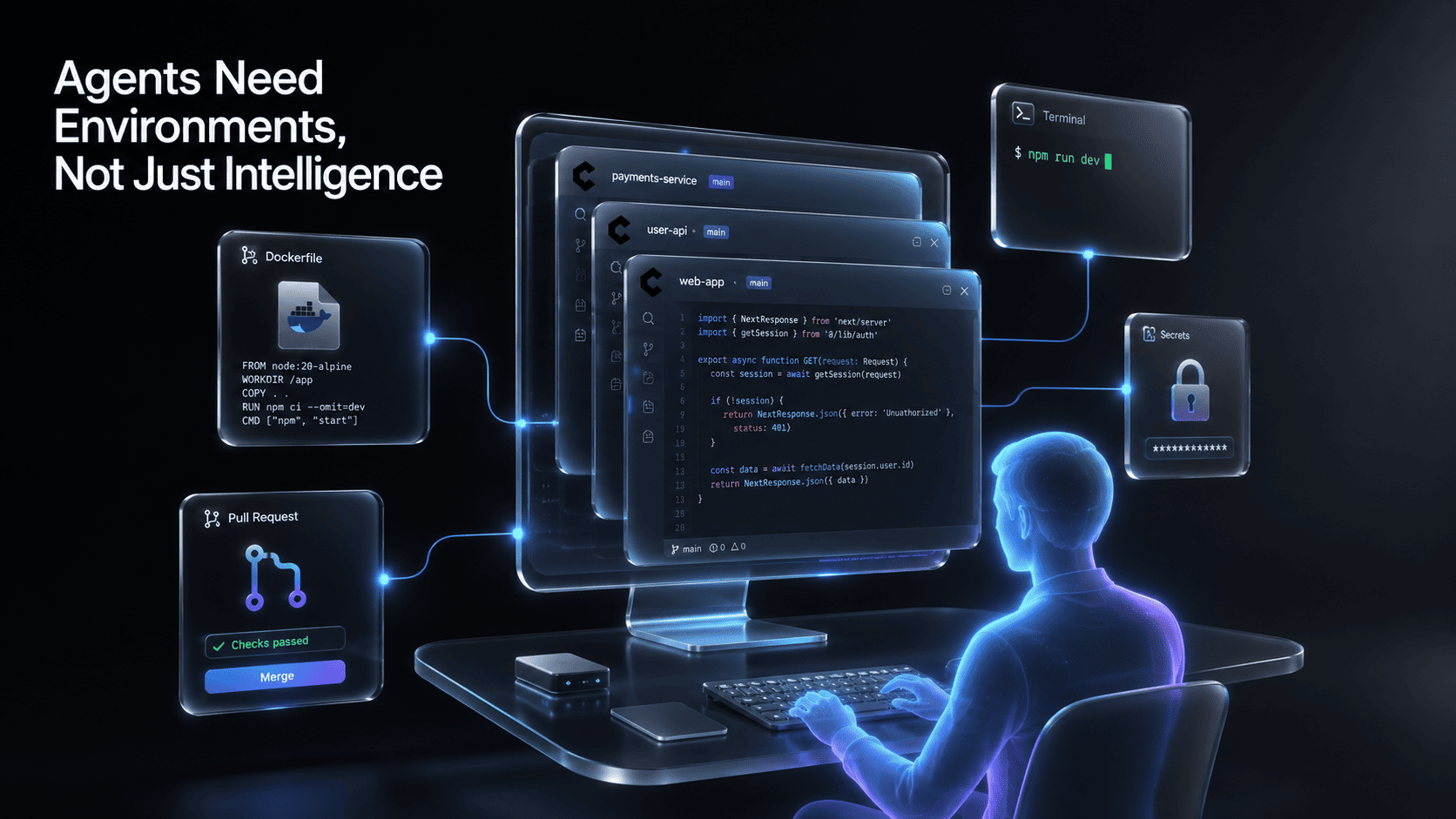
Cursor shipped a new release for cloud agents, and the headline is simple. Agents now get a full development environment, the kind a human engineer would expect on day one. Cloned repositories, installed dependencies, credentials for internal tools, access to build systems. The whole setup, configured once and reused.
This sounds like plumbing. It is actually the unlock.
Why This Matters More Than Another Model Bump
An agent that writes code but cannot run tests, hit your APIs, or pull from a private package registry is a code suggester. It produces diffs and hopes. Closing the loop on real engineering work requires the boring stuff around the model, not just a smarter model.
Cursor's release focuses on exactly that boring stuff. And the result is agents that can actually finish tasks instead of handing back something a human still has to validate end to end.
Multiple Repositories in One Environment
Most production work touches more than one codebase. A frontend, a backend, a shared library, maybe a service or two. Cursor's cloud agents now run inside environments that hold all of those together, with reuse across sessions.
In practice this means an agent can trace how a change in one repo affects another. It can ship the fix in the right places, run tests across the boundary, and produce a pull request that reflects the full scope of the change. Amplitude is already using this for Slack reported issues. An agent picks up the report, figures out which repos are involved, and opens the PR with full context.
Configuration as Code, With Sane Defaults
Environments are defined through Dockerfiles. Build secrets are supported, so private registries are reachable without leaking credentials into the running agent. Layer caching is faster on cache hits.
For Enterprise teams in private beta, Cursor can also auto generate the Dockerfile by inspecting the repo and detecting tools and dependencies. The output is editable and version controlled, which is the right default. Generated configs that you cannot review or change tend to age badly.
When a config fails, the agent falls back to a base image with a clear warning instead of crashing. Small detail, real impact on reliability.
Governance Built In
Every environment carries its own version history, with review and rollback. Admins can restrict who is allowed to roll back. Audit logs capture every change. Egress and secrets are scoped per environment, so a leak in one cannot touch another.
This is the layer that decides whether agents are allowed near production codebases at most companies. Without it, security teams say no. With it, the conversation shifts to which workflows go first.
What This Signals
Recently the conversation around coding agents was about model quality. Quietly, the harder problem has been giving agents enough context and capability to act like a junior engineer who actually finished their onboarding.
Cursor's release is one answer. Anthropic's Claude Code, with its skills and MCP integrations, is another. The shape is the same in both. Agents need environments, not just intelligence.
For teams building with agents, the takeaway is practical. Stop tuning prompts in isolation. Invest in the environment your agent runs in. The ceiling on what your agent can deliver is set there, not in the model.