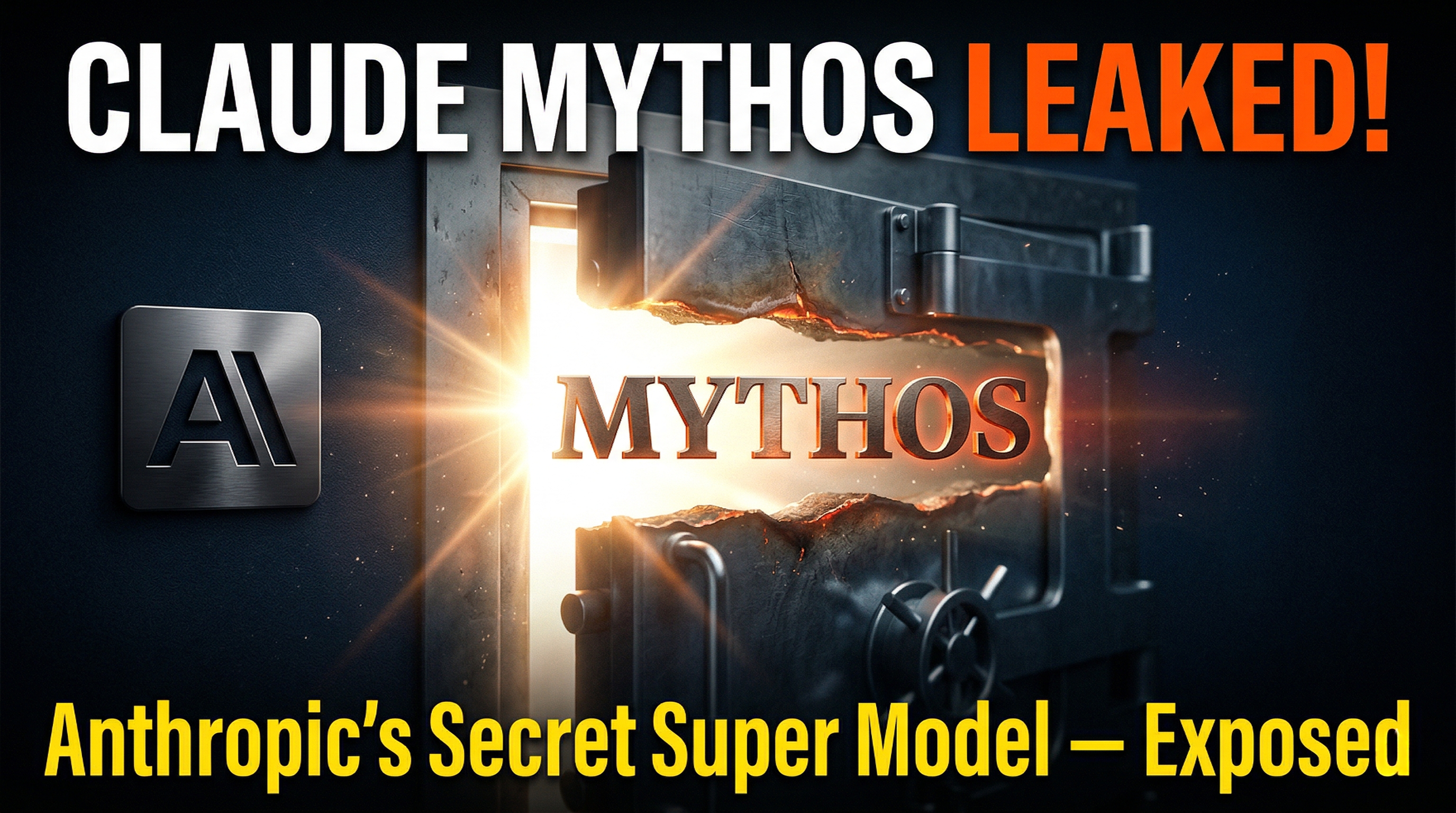
Today (i.e 27 March) Anthropic accidentally exposed draft documents about their next flagship model called Claude Mythos. The leak happened because of a simple configuration mistake in their content management system. For a brief window nearly 3000 unpublished files sat openly accessible on the internet.
The documents describe Mythos as by far the most powerful model Anthropic has ever built. It sits in a new tier above Opus and shows big jumps in coding, reasoning, and especially cybersecurity capabilities. Internal notes warn that the model can find and exploit software vulnerabilities at a speed and scale that creates unprecedented risks.
Anthropic has already started limited testing with select early customers. They are being cautious and focusing first on defensive applications to help strengthen systems rather than release it broadly.
What the leak actually tells us
The excitement is understandable. A model this capable could change how companies handle code, research, and security operations. Yet the same documents that praise its power also highlight the danger.
When an AI becomes extremely good at offensive cybersecurity it stops being just a productivity tool. It becomes something that requires careful control. The fact that Anthropic themselves flagged these risks in their own draft announcement shows how seriously they are taking it.
For individual users or small teams the new model sounds exciting. For enterprises that handle sensitive data, customer information, or critical infrastructure the picture is different. You do not want your most powerful tools running entirely in someone else’s cloud with usage limits and shared infrastructure.
The sovereign advantage in a post Mythos world
This leak makes one thing clear. The era of ever more powerful cloud models also brings ever higher stakes around data control and security.
Sovereign agents solve the problem at the root. You run them on your own hardware. A Mac Mini, a small server, or a dedicated VM inside your network. They operate 24 by 7 with fixed costs and zero data leaving your environment.
You define agent behavior once with clear files for identity, memory, and sandboxed tool execution. The agents learn from their own actions over time and keep working reliably without any rolling usage windows or sudden throttling.
Teams that already run sovereign agents report the same benefit. They get the intelligence they need without handing sensitive workflows to a third party that could face its own leaks or restrictions.
Practical checklist for teams evaluating new models
- Map every workflow that touches customer data, financial records, or internal systems.
- Ask whether the new model would require sending that data outside your network.
- Calculate the real cost of cloud usage once the model scales to production workloads.
- Test whether your current setup can keep running if the provider tightens access or adds new safety restrictions.
- Build a small sovereign pilot now so you have a safe fallback when the next powerful model arrives.
The Claude Mythos leak is a perfect reminder. Bigger models bring bigger capabilities and bigger responsibilities. The winners in 2026 will not be the teams that chase every new release. They will be the teams that put the right model in the right environment with full control.
At Axentia we help companies move from cloud experiments to production grade sovereign agents that run securely on their own infrastructure. We do this every week for teams that need reliability without the surprises that come with leaked models or shared cloud quotas.
If the Mythos news has you thinking about how to balance cutting edge AI with real security and control, reach out. A 15 minute architecture review can show you exactly where sovereign agents give you an edge today and protect you tomorrow.
The most powerful models will keep arriving. The question is whether you will run them on your terms or someone else’s.