
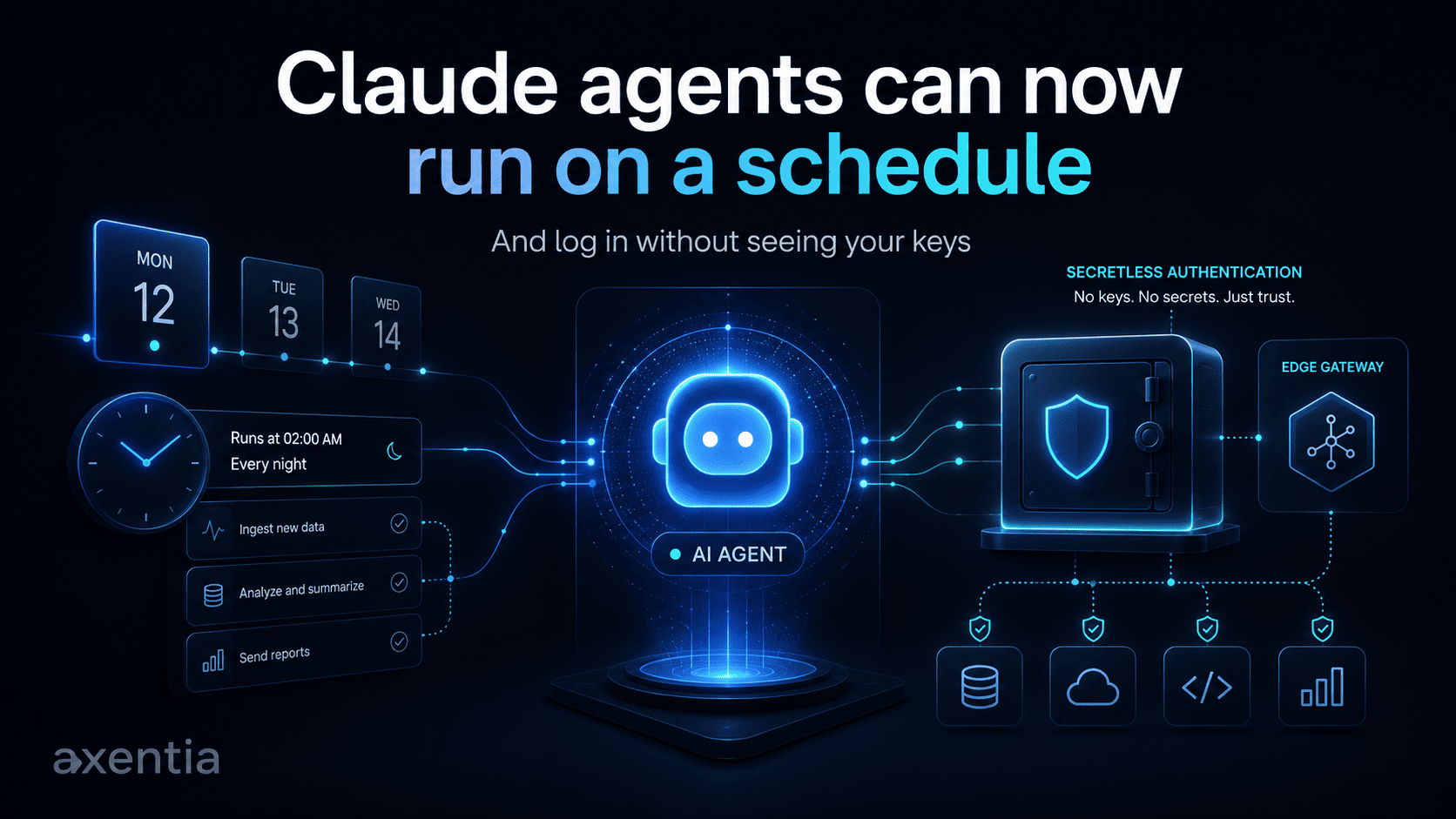
Two of the hardest problems with AI agents have nothing to do with how smart the agent is. They are far more boring than that. Who starts the agent when nobody is at their desk? And how does it sign in to your tools without you handing over a password?
Anthropic answered both with two new features in Claude Managed Agents, both available in public beta on the Claude Platform.
Agents that run themselves
The first feature is scheduled deployments. You give an agent a schedule, and it runs on its own. Each time the schedule fires, the agent spins up a fresh session, finishes its task, and shuts down. There is no separate scheduler for your team to build or maintain.
That covers a lot of the work that quietly eats a founder's week. A nightly sync that pulls fresh data into one place. A weekly compliance scan. A daily digest that lands in your inbox before you open your laptop. You can pause, resume, or archive any of these whenever you want, or trigger an extra run on demand.
Companies are already living in this. Rakuten has agents that read spreadsheet data and produce reports and decks on a weekly or monthly rhythm. Actively AI threw out the scheduling system they had built themselves and replaced it with this. Ando uses it to chase sales and hiring follow-ups so nobody on the team has to.
The pattern is the same in each case. Work that used to need a person to kick it off now just happens.
Logging in without leaking secrets
The second feature solves the trust problem. Agents are useful only when they can reach your other tools, and reaching those tools means handing over API keys. Nobody wants an autonomous agent holding the keys to their billing system.
The new approach keeps the agent away from the actual key. You store the key in a vault and register which services it is allowed to reach. Inside the agent's workspace there is only a placeholder. The real key gets attached at the last possible moment, at the network's edge, and only on requests to the services you approved.
So even if someone tricks the agent into misbehaving, the agent never had the secret to give away. If you need to rotate a key, you change it in one place and active sessions pick up the new value on their next call.
Notion uses this to let its agents upload files without ever exposing a token. Browserbase uses it to give agents the ability to browse the web. Milana plugs an agent straight into a customer's codebase to find and fix bugs.
Why this matters for a lean team
Neither feature is flashy. Both remove the kind of infrastructure work that used to stand between an idea and a working product. A schedule you do not have to run. A login system you do not have to secure.
For a small team, that gap is everything. It is often the difference between an agent that lives in a demo and one that quietly does real work every night while you sleep.
At Axentia we watch updates like these closely, because they keep lowering the bar for what a lean team can ship. If you have an agent idea sitting on the shelf, the honest answer to whether you can build it keeps getting better.