
Introduction: Why Traditional RAG Falls Short in 2026
Traditional Retrieval Augmented Generation (RAG) systems follow a straightforward process: retrieve relevant documents and generate a response. While this approach works for simple queries, it often struggles with complex questions, unclear user intent, and tasks that require multiple steps or decision making.
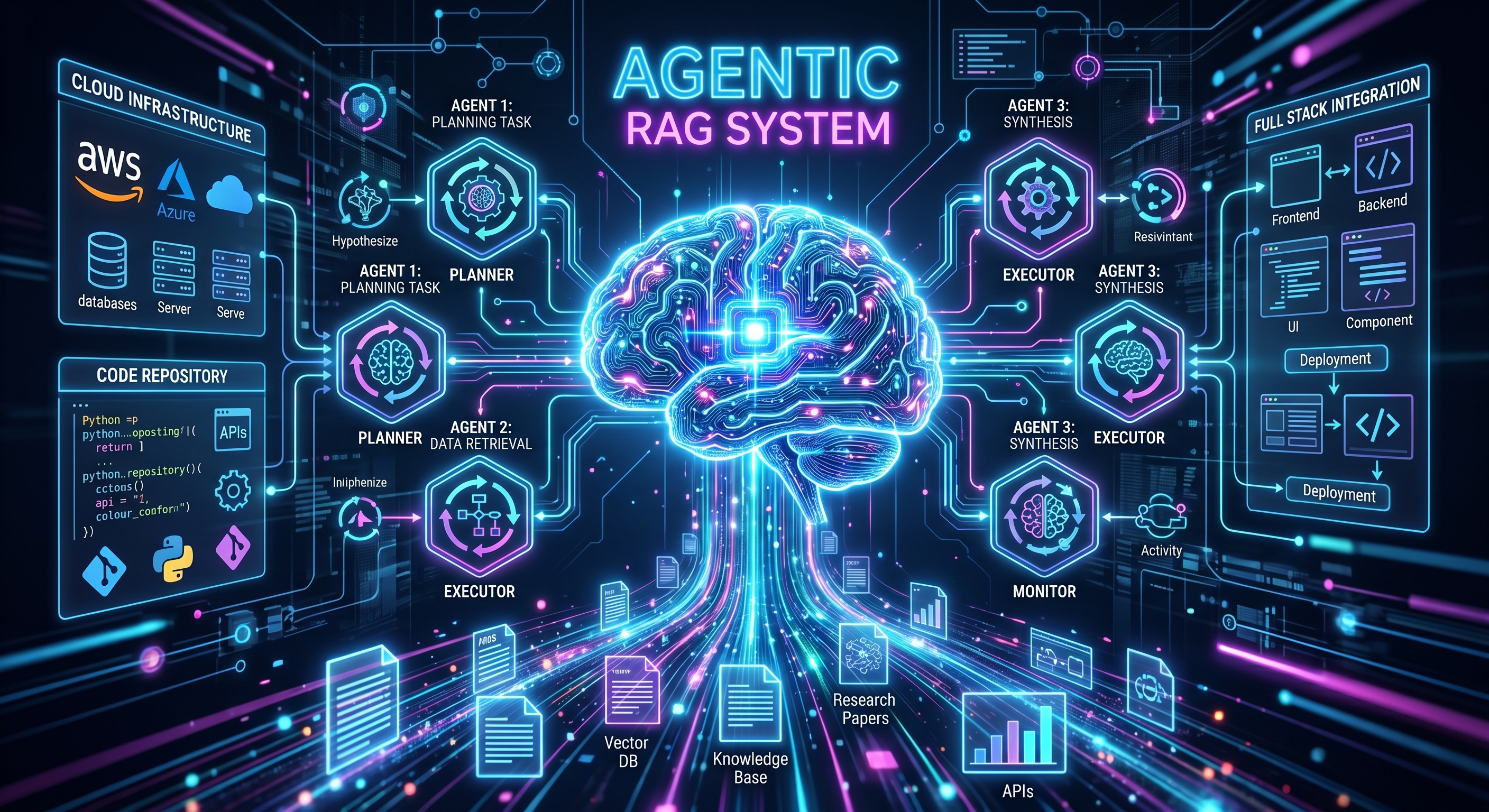
This limitation has led to the rise of Agentic RAG. Unlike basic RAG, Agentic RAG turns the AI into an intelligent system that can plan, reason, use tools, evaluate results, and iterate until it reaches the best possible answer. At Axentia, we build these advanced systems for clients who want reliable and powerful AI solutions beyond ordinary chatbots.
What is Agentic RAG?
Agentic RAG combines powerful retrieval techniques with autonomous AI agents. Instead of performing a single retrieval pass, the system works in a continuous loop where it:
- Breaks down complex queries into smaller tasks
- Decides what information to retrieve and from which sources
- Analyzes retrieved data and calls necessary tools
- Evaluates whether the current information is sufficient
- Refines its approach if needed before delivering the final output
This creates a flexible and thoughtful process similar to how an experienced professional handles research and problem solving.
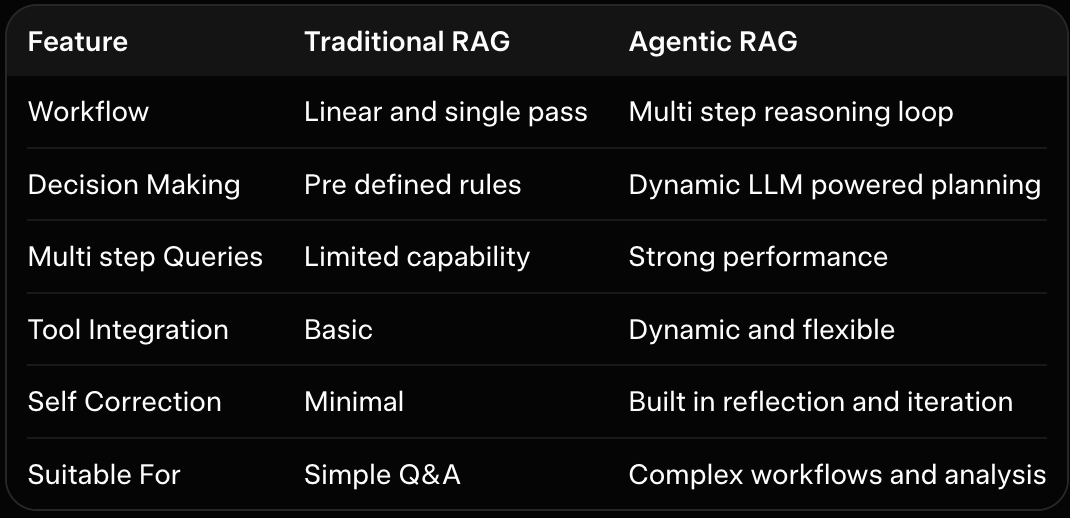
Traditional RAG vs Agentic RAG
Key Benefits for Full Stack AI Applications
- Significantly improved accuracy with fewer hallucinations
- Ability to handle sophisticated, multi step business tasks
- More actionable and useful responses for end users
- Smooth integration with modern web technologies
- Foundation for building intelligent SaaS features and internal tools
Recommended Tech Stack for Building Agentic RAG (2026)
- Frontend: Next.js 15 with React Server Components
- Backend: Python (FastAPI) or Node.js
- Agent Framework: LangGraph for reliable stateful workflows
- Vector Stores: Pinecone, Weaviate, Supabase, or Qdrant
- LLMs: Claude 4, GPT 5 series, or Grok models
- Monitoring: LangSmith or custom observability tools
Implementation Best Practices:
- Use smart chunking and rich metadata for documents
- Combine vector search with keyword and graph based retrieval
- Build robust tool calling capabilities (database queries, APIs, calculators)
- Add proper evaluation metrics and monitoring from day one
- Include cost controls and safety guardrails for production use
Practical Use Cases
- Smart customer support systems that resolve issues by pulling data from multiple internal sources
- Enterprise knowledge assistants for deep research and analysis
- Automated reporting and analytics features in SaaS products
- Personalized workflow automation tools for businesses
Common Challenges and Solutions
Cost management remains important. Using routing techniques to send simple queries to lighter models helps control expenses. Strong observability is essential to understand agent decisions. Security practices such as data isolation and prompt guardrails must be implemented carefully. Finally, focus on measuring real task success rates rather than just basic accuracy.
The Road Ahead
Agentic RAG represents the next evolution of intelligent applications. Organizations adopting this approach can deliver far more capable AI solutions that drive real business value.
At Axentia, our AI full stack development team specializes in designing, developing, and deploying production ready Agentic RAG systems. We help companies transform their ideas into robust and scalable AI applications quickly and efficiently.
Ready to build smarter AI applications for your business? Reach out to the Axentia team today.